The South Pacific nations of Fiji and the Solomon Islands are home to the largest mangrove forests in the Pacific Islands. These ecosystems fulfil important functions in climate protection. On the one hand, they capture CO2 from the atmosphere; on the other, they protect coastlines from erosion and flooding as sea levels rise. Yet their protection cannot be taken for granted. In Fiji, they are set to make way for sandy beaches for tourists. In the Solomon Islands, they must give way to transport routes for timber exports by Malaysian and Chinese companies. Even during British colonisation, mangrove forests were cleared to build harbours along the coast. They were considered useless because no money could be made from them. Furthermore, in the eyes of Europeans, they had a negative image: dark, menacing and wild, just like the indigenous population.
Indigenous narratives versus colonial narratives
“Drawing on archival research, we will take a critical look at this legacy and highlight how it continues to have an impact on the economy and society to this day,” explains Bruckner. Even nature conservation perpetuates colonial thinking: “Once again, it is outside experts who are telling local people how valuable the place they live in is,” says the researcher. She wants the islanders to tell their own stories – about their traditions, experiences and emotions – which have bound their communities to the mangroves for centuries. These stories are intended to empower people to shape their own futures. “After all, our relationship with a landscape influences the way we treat it. We must perceive nature with all our senses in order to deepen our relationship with it and our care for it,” emphasises Bruckner.
Alongside ethnographic fieldwork, researchers will run storytelling workshops with young people in Fiji and the Solomon Islands over a two-year period. They will collect stories about life with the mangroves and explore the culture and traditions of their communities. Politics and public administration will also be involved. Ultimately, a digital storymap featuring texts, images and videos will document these indigenous narratives – serving as a guide to a bright future for both people and mangroves.
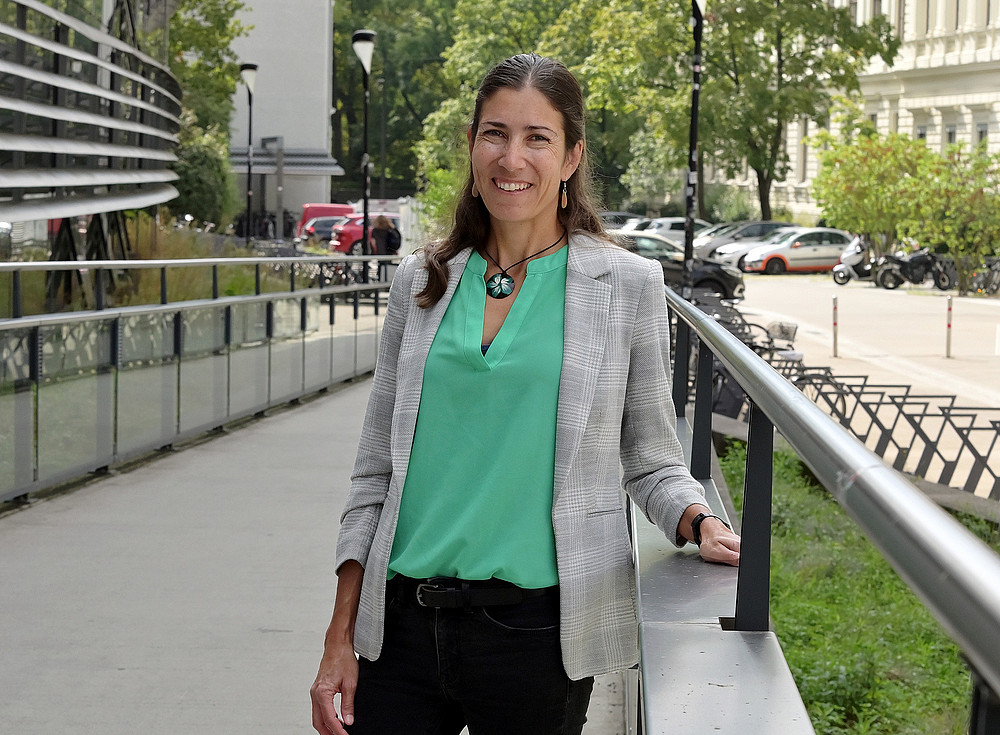
Heide Bruckner studied Environmental Studies (BA) in New York, Human Geography (MA) in Arizona and Agroecology in California. From 2014 to 2018, she conducted research as a PhD candidate at the Department of Geography and Regional Science at the University of Graz on agriculture and food systems in Austria. After completing her PhD, she was an Assistant Professor at the University of Colorado in Boulder. In 2022, she returned to the University of Graz to take up a post as a university assistant. She subsequently conducted research as part of the EU Horizon project FALAH – Family Farming, Lifestyle and Health in the Pacific Islands. Heide Bruckner has now been awarded an ERC Starting Grant worth 1.5 million euros over five years for the research project “Feeling the tides of change: restor(y)ing visceral ecologies of mangroves in the Pacific Islands”.