Begin of page section:
Page sections:

  • Go to contents (Accesskey 1)
  • Go to position marker (Accesskey 2)
  • Go to main navigation (Accesskey 3)
  • Go to sub navigation (Accesskey 4)
  • Go to additional information (Accesskey 5)
  • Go to page settings (user/language) (Accesskey 8)
  • Go to search (Accesskey 9)

End of this page section. Go to overview of page sections

Begin of page section:
Page settings:

English en
Deutsch de
Search
Login

End of this page section. Go to overview of page sections

Begin of page section:
Search:

Search for details about Uni Graz
Close

End of this page section. Go to overview of page sections


Search

Begin of page section:
Main navigation:

Page navigation:

  • University

    University
    • About the University
    • Organisation
    • Faculties
    • Library
    • Working at University of Graz
    • Campus
    Developing solutions for the world of tomorrow - that is our mission. Our students and our researchers take on the great challenges of society and carry the knowledge out.
  • Research Profile

    Research Profile
    • Our Expertise
    • Research Questions
    • Research Portal
    • Promoting Research
    • Research Transfer
    • Ethics in Research
    • Commission for Scientific Integrity
    Scientific excellence and the courage to break new ground. Research at the University of Graz creates the foundations for making the future worth living.
  • Studies

    Studies
    • Prospective Students
    • Students
    • Welcome Weeks for First Year Students
  • Community

    Community
    • International
    • Location
    • Research and Business
    • Alumni
    The University of Graz is a hub for international research and brings together scientists and business experts. Moreover, it fosters the exchange and cooperation in study and teaching.
Topics
  • Sustainable University
  • Researchers answer
  • Work for us
Close menu

End of this page section. Go to overview of page sections

Begin of page section:
You are here:

University of Graz Faculty of Environmental, Regional and Educational Sciences Neuigkeiten Neustart, Berufung, Ferien: Was Quereinsteiger:innen in die Schule zieht
  • About the Faculty
  • Study services
  • Our research
  • Dean's Office
  • Neuigkeiten

End of this page section. Go to overview of page sections

Tuesday, 08 September 2026

A fresh start, a calling, holidays: what draws people from other career paths to teaching

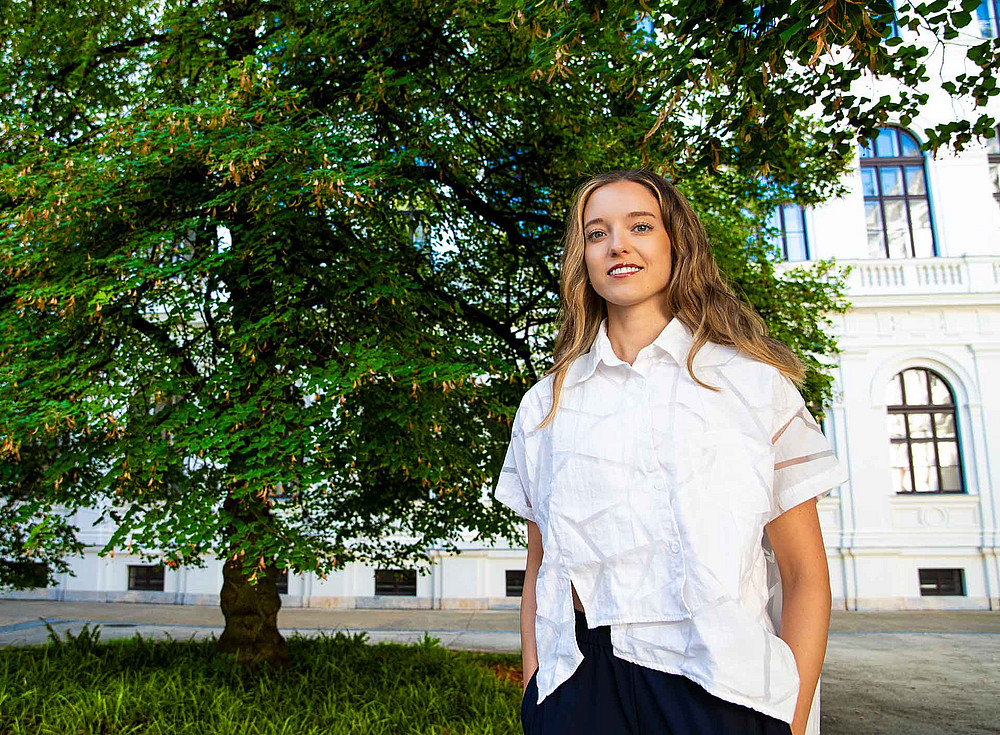
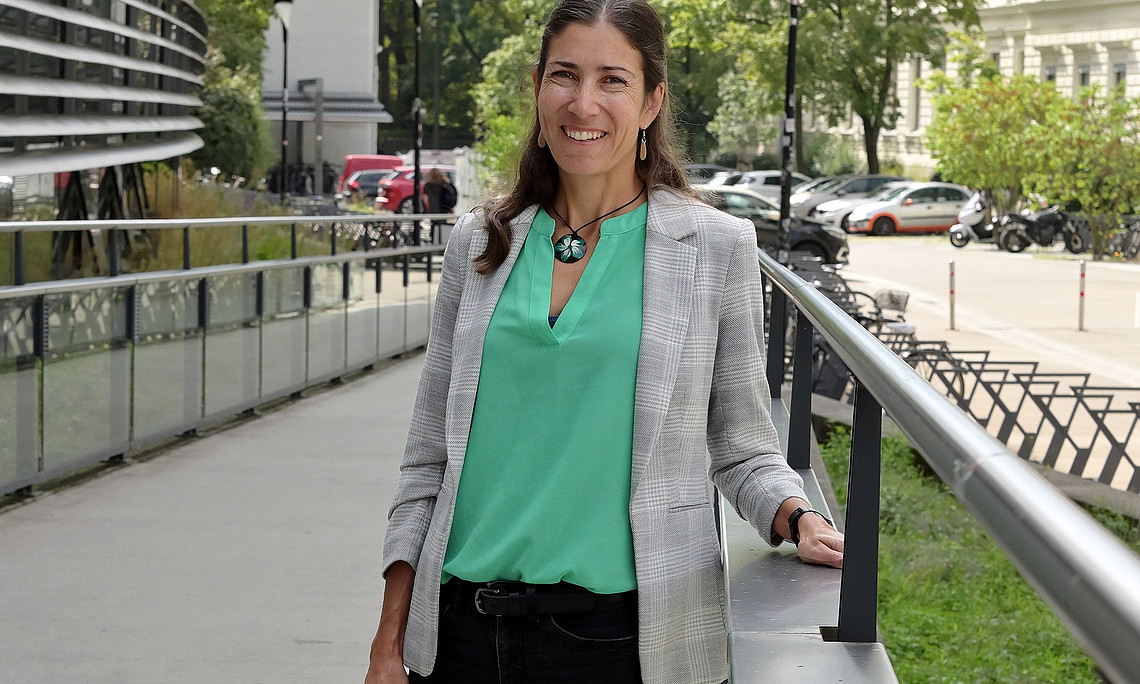
A young woman with long hair is standing in a white blouse and dark trousers in front of a large green tree and a historic building. ©Uni Graz/Tzivanopoulos
©Uni Graz/Tzivanopoulos

In her PhD thesis at the University of Graz, Melanie Gürentz examined how career changers identify with the teaching profession. Photo: Uni Graz/Tzivanopoulos

They used to develop software; now they teach maths in the classroom. Career changers are expected to help address the shortage of qualified teachers in Austria’s schools. In their doctoral theses at the Institute for Educational Research and Teacher Training at the University of Graz, Melanie Gürentz and Claudia Mair examined how these new teachers perceive their new professional roles.

Since 2023, people with prior professional experience and additional teacher training have been able to teach. “There isn’t just one group of career changers,” Melanie Gürentz points out. Everyone has different reasons for choosing to work in the classroom. The spectrum ranges from a genuine calling to the desire to have plenty of holiday weeks, as she knows from a qualitative study involving 13 teachers at compulsory general education schools in Graz. Ultimately, this motivation affects how career changers identify with their work and, in turn, has an impact on the pupils. “Those who clearly identify with the profession are more likely to remain in the teaching profession,” confirms Melanie Gürentz. A lack of identification could indicate a further change of job.

Career changers with relevant professional experience are certified to teach a specific subject. However, the education researcher reports that they are sometimes assigned to teach subjects outside their field of expertise in order to fill gaps. “Overall, this is problematic for the quality of teaching,” she says. At the same time, many have a full teaching load and are simultaneously taking pedagogical courses as part of the university programme “Career Change to Secondary School Teaching”.

Altruistic motivation

In a parallel study, Claudia Mair compared the motivation of subject-qualified teachers and career changers. To this end, the PhD student surveyed 619 teachers across Austria in secondary schools, polytechnic schools and academic secondary schools (AHS). Mair’s finding: altruistic motivation is slightly more pronounced among career changers. She explains: “They want to pass on knowledge to their pupils and pursue a meaningful role.” The differences are more pronounced in terms of both digital and communication skills. “The knowledge gained from their previous profession is put to very good use in planning and subject-specific expertise. The challenges, however, include classroom management, marking and bureaucratic procedures,” notes Mair.

Whether the transition into teaching is successful depends on individuals, not on structures, Claudia Mair warns: “What is crucial for satisfaction and retention in teaching is not so much the workload as the sense of being able to meet the demands.”
Melanie Gürentz confirms the significant role played by the school environment: “The key factor is how well they are accepted by colleagues and the headteacher, or how well the accompanying mentoring programme works.” The teacher herself is looking forward to teaching again. Having completed her PhD at the University of Graz, she will be returning to the classroom in September as a secondary school teacher of English and French.

Teacher training 

With its teacher training programme covering more than 20 subjects, the University of Graz is helping to address the shortage of teachers. With the current 2026/2027 winter semester, the Bachelor’s programme has been shortened from eight to six semesters. The subsequent Master’s programme lasts four semesters. In the 2024/25 academic year, around 450 graduates completed their training. 
created by Andreas Schweiger

Related news

Dagmar Henner 1969–2026

Dagmar war uns allen eine wunderbare Kollegin. Wir haben gemeinsam über Forschungsfragen nachgedacht, in Projekten gearbeitet, versucht, Antworten zu finden – für eine bessere Zukunft, für alle, die nach uns kommen. Wir denken an die Zeit mit Dagmar und verbleiben in tiefstem Respekt und mit großer Dankbarkeit.

ABGESAGT: URBI Science Talk

ABGESAGT Ein neuer Termin im Herbst wird noch bekanntgegeben.

Barbara Gasteiger-Klicpera bei STEIRERIN AWARDS nominiert

Barbara Gasteiger-Klicpera ist als einzige Wissenschaftlerin der Uni Graz in der Kategorie Wissenschaft & Technik bei den STEIRERIN AWARDS nominiert.

URBI Get Together - 12. März, ab 16 Uhr, Meerscheinschlössl

Begin of page section:
Additional information:

University of Graz
Universitaetsplatz 3
8010 Graz
Austria
  • Contact
  • Web Editors
  • Moodle
  • UNIGRAZonline
  • Imprint
  • Data Protection Declaration
  • Accessibility Declaration
Weatherstation
Uni Graz

End of this page section. Go to overview of page sections

End of this page section. Go to overview of page sections

Begin of page section:

End of this page section. Go to overview of page sections